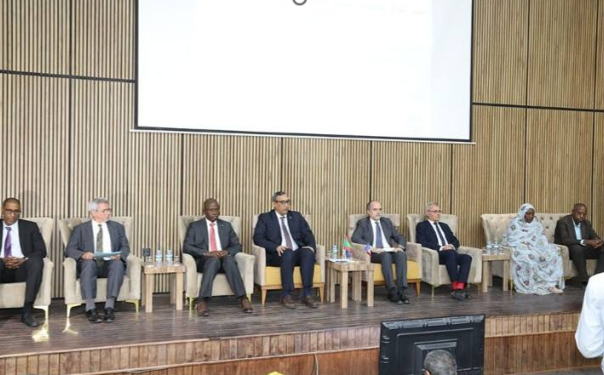
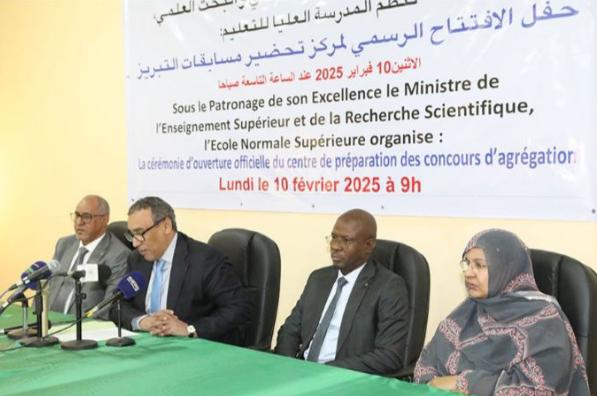
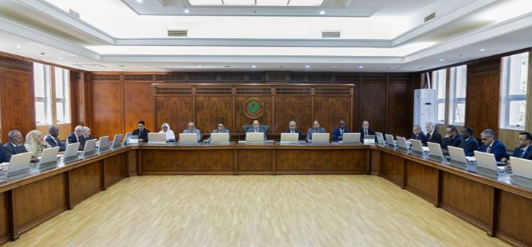
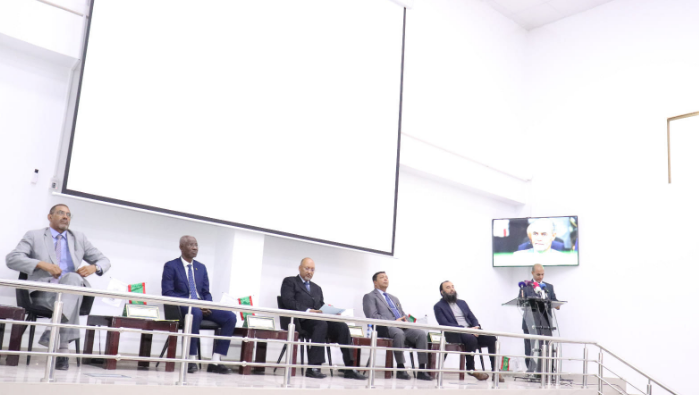
The first edition of the consultation days on higher education and scientific research in Mauritania opened today, Tuesday, at the Conference Palace in Nouakchott, organized by the Ministry of Higher Education and Scientific Research in partnership with the Francophone University Agency.
The aim of these days is to identify ways to implement the two national strategies recently adopted by building a strong network of partners to ensure the success of the reform initiatives pursued by the sector in recent years.
This meeting, which brings together numerous international experts from Canada, Egypt, France, Senegal, and Tunisia, will be an important step in the process of developing national strategies aimed at strengthening higher education and scientific research in Mauritania by 2030.
Over two days, participants will address several topics related to the reality of higher education governance and the LMD (licence-master-doctorate) system training opportunities, graduate employability and professional integration, the internationalization of Mauritanian higher education, including international cooperation, the promotion of language teaching, the orientation of students towards foreign studies, and the application of information and communication technologies (digitization) as tools for the development of teaching and scientific research, particularly the organization and functioning of doctoral schools and research funding.
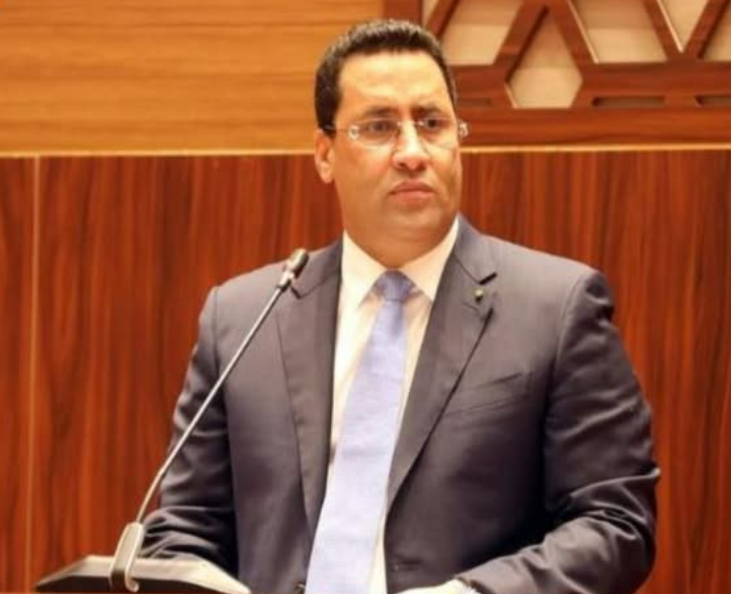
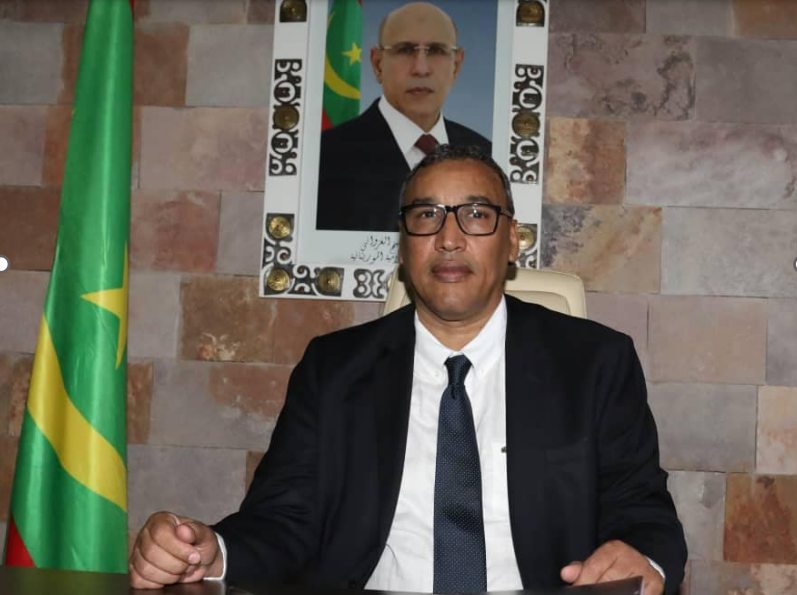
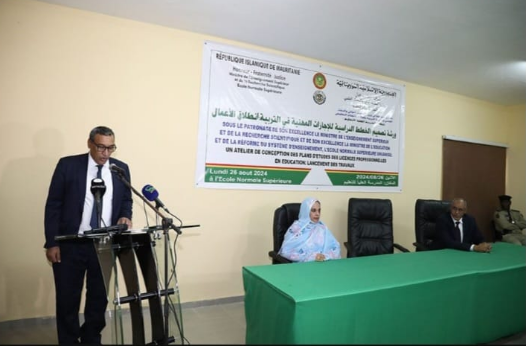
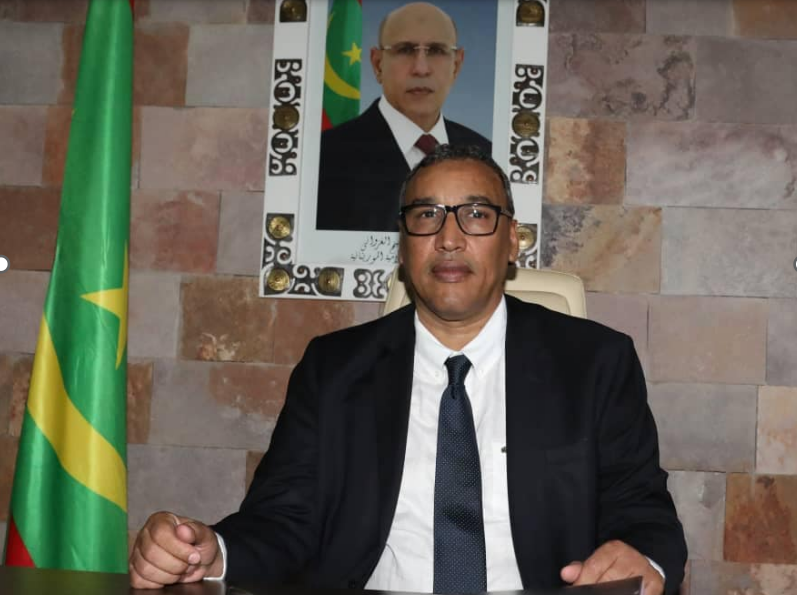
In his speech on the occasion, the Minister of Higher Education and Scientific Research, Mr. Anang Mamudu, emphasized the importance of these consultation days as an opportunity for national and international researchers to exchange experiences on the most important issues that will develop higher education and scientific research, raise its level, and improve its quality to meet the country's development requirements.
He said that the higher education and scientific research sector always strives to formulate and implement national policies in the field of higher education and research, define development strategies for the sector, adapt training programs to the country's needs, develop scientific research and align it with the country's economic and social priorities, as well as organize access to higher education institutions and programs and their accreditation.
He recalled the importance that His Excellency the President of the Republic, Mr. Mohamed Ould Cheikh El Ghazouani, attaches to the development and modernization of higher education and scientific research and raising its level to meet the requirements of the times and globalization. emphasizing that the sector is counting on the rich conclusions and recommendations that will emerge from this consultative workshop to advance the higher education and scientific research system in our country.
He said that excellence in technical training is not enough; rather, it is necessary to have strong links between different disciplines, and that emerging scientific disciplines are scientific questions, for example, through being a subject of work in our world today, such as hydrology, and common climate issues, which must include historians, climatologists, anthropologists, sociologists, mathematicians, physicists, philosophers, and science historians.
He also reviewed the role of disseminating the humanities and social sciences with powerful tools from other disciplines: modeling in logic (philosophical) and linguistics; neuroscience in linguistics and cognitive philosophy; physics and biology in archaeology, etc., in order to boost the country's development dynamics.
For his part, the president of the Agence universitaire de la Francophonie, Professor Salim Khalbous, pointed out that they had mobilized a wide range of expertise at the national and international levels in record time to achieve an exchange of experiences between many systems so that Mauritania could implement a well-thought-out reform.
He added that the African Agency for Francophonie had been in high demand from the countries in which it operates to support them in considering global reforms.
Regarding the key elements of successful reform, he raised the issue of funding bottlenecks, which require a realistic vision of the reform itself to overcome. The second element concerns interaction between actors, which means taking everyone's interests into account in order to achieve ownership of the reform.
The third consists of formulating three basic strategic concepts: setting priorities, basic requirements, and specialization.
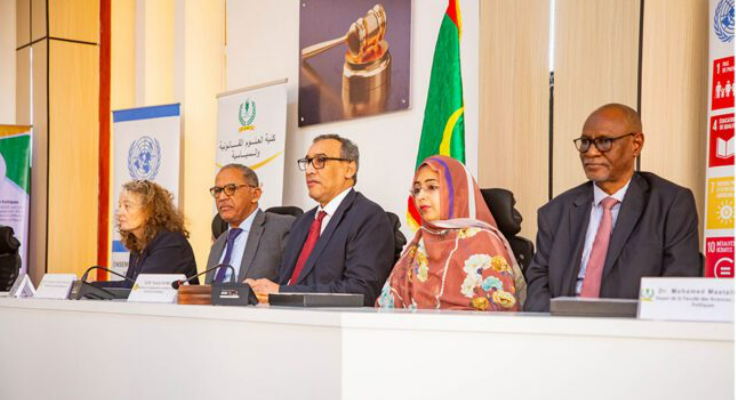
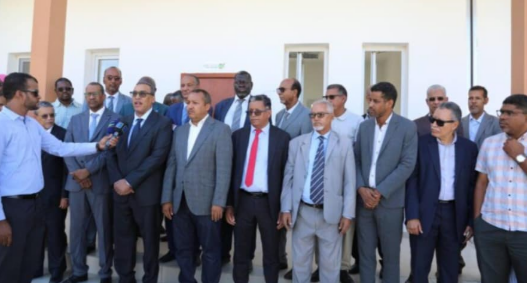
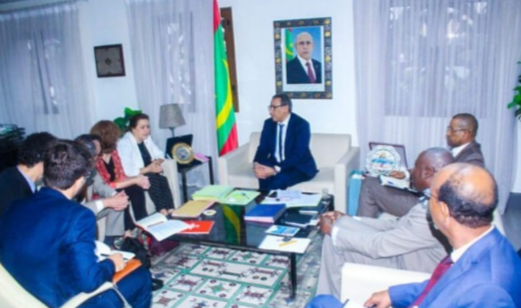
The consultation days were opened in the presence of the Secretary General of the Ministry, the Governor of Nouakchott West, and officials from the sector.